Blown-In Insulation Cost in Hawthorne, CA
Transparent Blown-In Insulation Cost Pricing for Hawthorne, CA Homeowners — Free Estimates
Find out the true blown-in insulation cost in Hawthorne, CA. Armour Hawthorne Insulation offers free estimates, R-38 attic installs & South Bay expertise. Call (424) 487-4483.
Understanding the blown-in insulation cost in Hawthorne, CA is the first step toward a more energy-efficient, comfortable home. Blown-in insulation — also called loose-fill insulation — is a modern insulation method where tiny particles of cellulose, fiberglass, or mineral wool are machine-blown into attics, walls, and crawl spaces to create a continuous thermal barrier with no gaps or seams.
Hawthorne’s unique coastal climate, aging housing stock, and proximity to LAX flight corridors make proper insulation especially critical for local homeowners. The marine layer that rolls in off the Pacific regularly drops nighttime temperatures into the low 50s even in summer, while warm Santa Ana wind events can push daytime highs past 90°F — a wide thermal swing that strains under-insulated homes year-round.
Read moreShow less
At Armour Hawthorne Insulation, we specialize in accurate, upfront blown-in insulation pricing for Hawthorne residents. Call us today at (424) 487-4483 for a free on-site estimate tailored to your specific home and neighborhood.
Understanding Blown-In Insulation and Its Costs
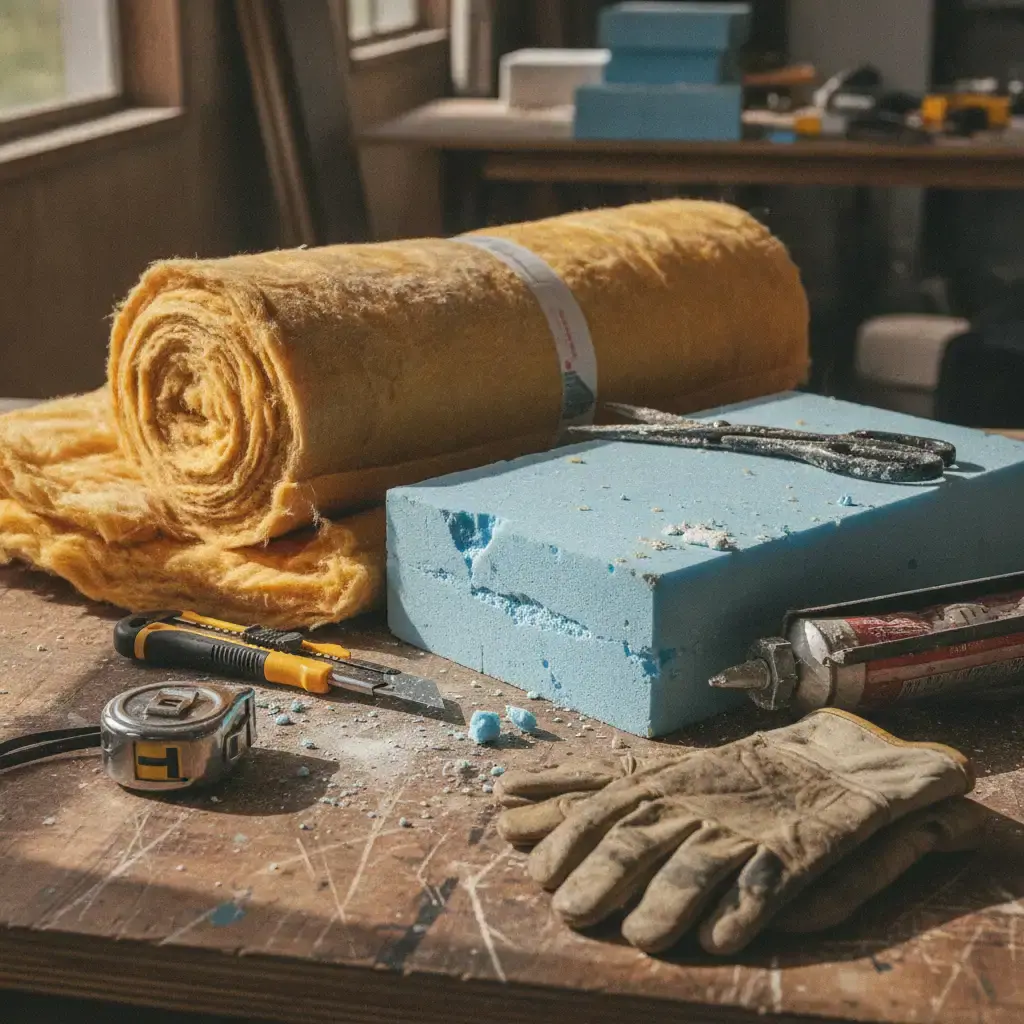
Blown-in insulation has been used in American residential construction since the mid-20th century, evolving from early asbestos-based loose fill into today’s safe, effective materials. The process involves a powerful blowing machine that shreds and propels insulation material through a flexible hose, allowing installers to fill irregularly shaped spaces — around joists, rafters, pipes, and wiring — far more completely than traditional batt insulation can.
There are three primary materials used in blown-in insulation installations:
- Cellulose: Made from 80–85% recycled paper products and treated with fire retardants, cellulose achieves an R-value of approximately R-3.2 to R-3.8 per inch. It is the most environmentally friendly option and performs exceptionally well in the mild-to-moderate temperature ranges common in the South Bay.
- Fiberglass: Spun glass fibers that achieve R-2.2 to R-2.7 per inch. Fiberglass is moisture-resistant and non-combustible, making it a popular choice in Hawthorne homes built during the post-WWII construction boom of the late 1940s and 1950s.
- Mineral Wool (Rockwool): Made from volcanic rock or industrial slag, mineral wool reaches R-3.0 to R-3.3 per inch and offers superior fire and sound resistance — a meaningful benefit given Hawthorne’s position directly beneath LAX flight paths.
Read moreShow less
The majority of Hawthorne’s residential housing stock was built between 1945 and 1975, a period when California energy codes were minimal or nonexistent. Many of these homes originally received little or no attic insulation, or were insulated with compressed, degraded fiberglass batts that now perform well below their original rated values. Blown-in insulation is the ideal retrofit solution because it can be added over existing material or blown directly into enclosed wall cavities through small access holes with minimal disruption to finished living spaces.
For homeowners in Hawthorne’s denser neighborhoods like Bodger Park and Holly Glen, where wall access is limited, blown-in insulation provides a cost-effective upgrade path that avoids the expense and mess of full interior or exterior wall renovation.
Why Blown-In Insulation Is Needed in Hawthorne, CA
The Hawthorne Coastal Climate Challenge
Hawthorne sits approximately 4.5 miles from the Pacific Ocean, close enough that the marine layer — that famous Southern California coastal fog — directly influences local temperatures on a near-daily basis from May through September, a phenomenon locals call “June Gloom.” NOAA weather station data recorded at nearby Hawthorne Municipal Airport (HHR) shows average nighttime lows in the 50–55°F range throughout summer, while afternoon highs regularly exceed 80°F. This 25–35°F daily temperature swing forces heating and cooling systems to cycle frequently, and without adequate attic insulation, that conditioned air escapes rapidly through the roof assembly.
Santa Ana Wind Events and Heat Spikes
Every fall and winter, Santa Ana wind events push hot, dry air from the inland deserts toward the coast. Hawthorne recorded temperatures exceeding 95°F during the September 2022 heat event that stressed the California electrical grid, and again during the October 2023 Santa Ana event that saw localized gusts above 40 mph. During these events, poorly insulated homes in neighborhoods like Ramona/134th Street corridor and the Yukon Avenue area saw indoor temperatures spike 10–15°F above comfortable levels, driving residents to run air conditioning at maximum capacity — a costly and sometimes unavoidable situation without proper insulation.
Aging 1950s and 1960s Housing Stock
A significant portion of Hawthorne’s single-family homes were constructed between 1948 and 1968, during the post-WWII suburban expansion that also gave birth to the aerospace and defense industry corridor along Aviation Boulevard. These homes typically feature 2×4 wall framing with minimal cavity depth, flat or low-slope roofs common in ranch-style architecture, and attic spaces that were originally insulated — if at all — with 2–3 inches of fiberglass batts that now measure R-6 to R-8 at best. California’s Title 24 energy code currently requires a minimum of R-38 in attics, meaning many Hawthorne homes are operating at less than 25% of the required thermal resistance.
LAX Noise and Vibration Effects
Hawthorne falls directly under the LAX Runway 24L and 24R approach corridors, with aircraft passing overhead at altitudes between 1,500 and 2,500 feet at intervals as frequent as every 90 seconds during peak hours. This constant vibration contributes to the settling and compaction of older insulation materials. Studies by the Los Angeles World Airports (LAWA) have documented increased rates of building envelope degradation in the Hawthorne-Inglewood-Lennox noise impact zone, which accelerates the need for insulation inspection and replacement.
Crawl Space Moisture from South Bay Soils
Hawthorne’s soil composition includes expansive clay-rich soils that retain significant moisture during winter rain seasons. The 2022–2023 El Niño rain season brought above-average rainfall to the South Bay — over 14 inches at the Hawthorne station, compared to the historical average of 12.02 inches — driving ground moisture into crawl spaces beneath the many pier-and-beam homes in older blocks near 120th Street and Doty Avenue.
Free, no-obligation estimates
Talk to Armour Hawthorne Insulation
Tell us what you need and we’ll take it from there.
Signs You Need Blown-In Insulation in Hawthorne
Energy and Comfort Warning Signs
- Monthly SoCalGas or Edison bills that are noticeably higher than neighbors in similar-sized homes
- Rooms that feel stuffy and hot during Santa Ana events even with AC running
- Cold floors in winter, particularly in rooms above crawl spaces or garages
- Inconsistent temperatures between rooms on the same floor — a 5°F or greater difference is a red flag
Physical and Structural Indicators
- Attic insulation depth below 10–11 inches (the approximate equivalent of R-38 in blown cellulose)
- Visible gaps, compressed batts, or bare wood joist areas in the attic floor
- Moisture staining, mold spotting, or musty odors near exterior walls or in the attic space
- Ice-cold walls to the touch during winter months — a sign of uninsulated wall cavities
Urgency Indicators
- Your home was built before 1978 and has never had insulation professionally evaluated
- You are hearing significantly more LAX aircraft noise indoors than you did five years ago — this often signals insulation degradation
- Your HVAC system is cycling on and off more than 3–4 times per hour during moderate weather
Our process
Our Blown-In Insulation Installation Process in Hawthorne
At Armour Hawthorne Insulation, we follow a structured, transparent process developed specifically for the types of homes and climate conditions found throughout Hawthorne and the surrounding South Bay communities.
- 01
Free On-Site Assessment (1–2 Hours)
Our technician visits your Hawthorne home to measure attic square footage, assess existing insulation depth and condition, inspect for air leaks around recessed lights, HVAC penetrations, and attic hatches, and evaluate crawl space conditions if applicable. We
- 02
Written Estimate and Material Recommendation (Same Day or Next Day)
We provide a detailed written quote broken down by area (attic, walls, crawl space) with specific R-value targets, material type, and projected energy savings. We explain all options without pressure.
- 03
Air Sealing Preparation (2–4 Hours on Installation Day)
Before any insulation is blown in, we air seal all major penetrations using fire-rated caulk and expanding foam. In Hawthorne’s older homes, this step alone can reduce air infiltration by 20–30%, significantly amplifying the effectiveness of the insulation abo
- 04
Machine Setup and Blown-In Installation (2–6 Hours Depending on Scope)
Our commercial-grade blowing machines are set up outside the home to minimize interior disruption. Hoses are run into the attic through the access hatch or, for wall cavities, through 2-inch access holes drilled from the exterior or interior. We install to Cal
- 05
Depth Verification and Quality Check (30–60 Minutes)
Depth rulers are placed throughout the attic before blowing begins and verified upon completion. We photograph the finished installation for your records.
- 06
Cleanup and Final Walkthrough (30 Minutes)
All work areas are cleaned and access holes patched. We walk through all completed areas with you and answer any remaining questions.
Blown-In Insulation Methods and Approaches
Open-Blow Attic Application
The most common method for Hawthorne homes — insulation is blown freely across the attic floor between and over existing joists. Ideal for accessible flat attics typical of the South Bay’s ranch and bungalow-style homes. We target a minimum settled depth of 10.5 inches of cellulose or 13 inches of fiberglass to achieve R-38.
Dense-Pack Wall Cavity Installation
For uninsulated wall cavities in Hawthorne’s older 2×4-framed homes, cellulose is blown in at high density (3.5 lbs per cubic foot) through small access holes. This method fills every corner of the cavity, eliminating the thermal bypasses common in batt insulation. It is the preferred approach on Doty Avenue-area bungalows and Bodger Park homes.
Stabilized or Wet-Spray Blown Cellulose
A small amount of water is added to cellulose during installation in open wall cavities before drywall is hung. This prevents settling during the drying period and is used on new construction or gut-renovation projects in Hawthorne’s growing infill development zone along Crenshaw Boulevard and Prairie Avenue.
Attic Conversion to Unvented Assembly (Hot Roof)
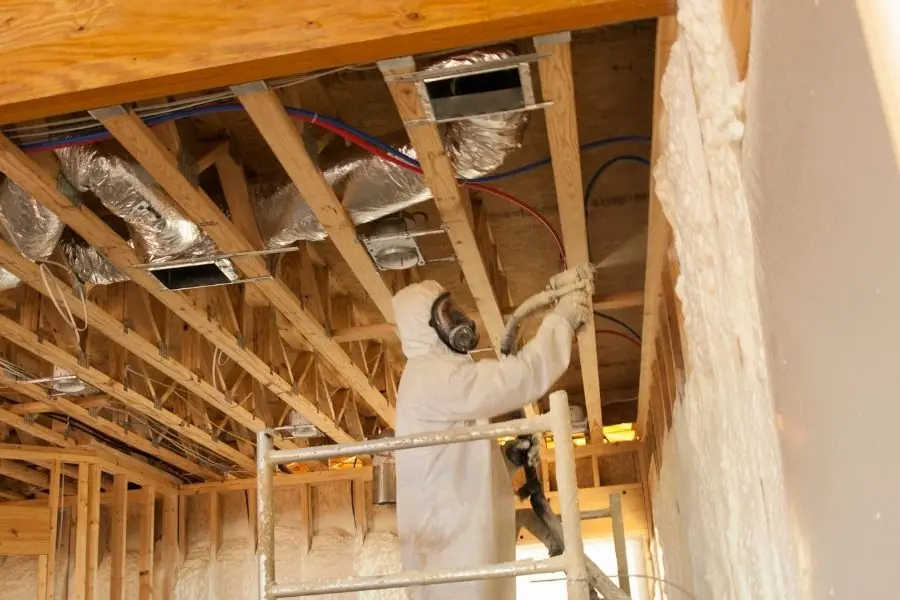
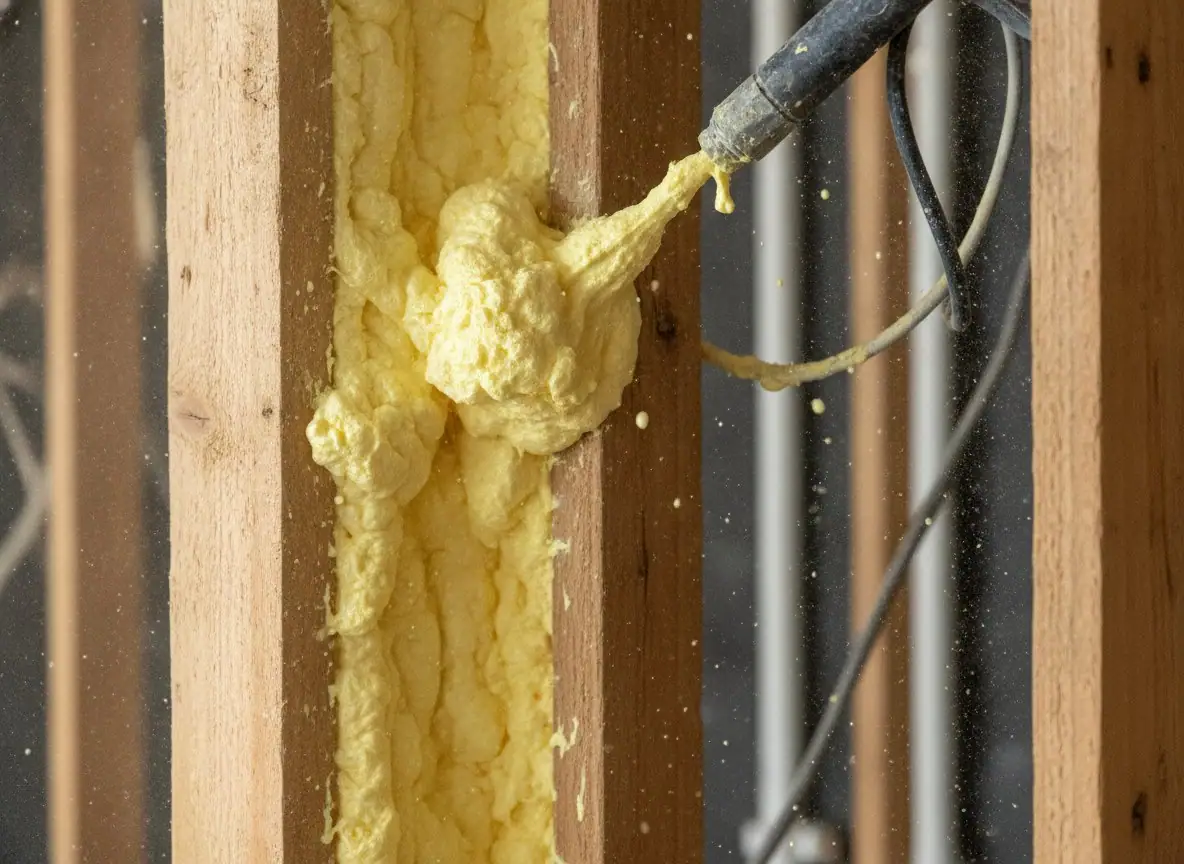
For flat-roof Hawthorne homes where traditional open-blow attic insulation is not feasible, we install closed-cell spray foam at the roofline combined with blown mineral wool at the attic floor, creating a hybrid conditioned attic assembly that protects HVAC ducts routed through attic space.
Blown-In Insulation Cost in Hawthorne, CA — What to Expect
The cost of blown-in insulation in Hawthorne depends on several factors including the area to be insulated, the material selected, existing insulation conditions, and access difficulty. Below are current typical price ranges for Hawthorne-area homes:
Attic Blown-In Insulation
- Cellulose, open-blow to R-38: $1.20–$1.80 per square foot installed
- Fiberglass, open-blow to R-38: $1.40–$2.00 per square foot installed
- Typical Hawthorne attic (800–1,200 sq ft): $960–$2,400 total
Wall Cavity Dense-Pack
- Cellulose dense-pack: $2.50–$4.00 per square foot of wall area
- Average Hawthorne home exterior wall treatment: $2,500–$6,000
Crawl Space Blown-In
- Blown mineral wool between floor joists: $1.80–$2.50 per square foot
- Typical Hawthorne crawl space project: $1,200–$3,000
Read moreShow less
Hawthorne-Specific Pricing Factors
Older Hawthorne homes with existing deteriorated insulation may require removal before new insulation is added, adding $1.00–$1.50 per square foot. Homes beneath LAX flight paths often benefit from mineral wool upgrades for added sound dampening, which carries a 15–20% material premium over standard cellulose. California residents may be eligible for utility rebates through SoCalGas and SCE Home Energy Efficiency programs that can offset $200–$800 of total project cost.
Call (424) 487-4483 for a precise quote. Get a Free Estimate Today
Neighborhoods in Hawthorne We Serve
Bodger Park
One of Hawthorne’s oldest and most established neighborhoods, Bodger Park features predominantly post-WWII single-story homes built between 1946 and 1958. Many have original narrow 2×4 wall framing and flat or low-slope roofs with minimal attic clearance, making dense-pack wall insulation and targeted open-blow attic work the primary services we provide here.
Holly Glen
A mid-century neighborhood with homes largely built in the 1960s featuring slightly larger attic spaces than Bodger Park. Holly Glen homes frequently show signs of compressed, degraded fiberglass batt insulation that needs removal before proper blown-in installation can be completed.
Ramona / Central Hawthorne
The Ramona corridor along 120th–134th Streets includes a mix of older single-family homes and smaller apartment buildings. Pier-and-beam foundations are common here, and crawl space insulation combined with blown-in attic work represents the most common project profile we complete in this area.
We also serve homeowners throughout Lawndale, Inglewood, Gardena, and all surrounding South Bay communities.
Maintaining Your Blown-In Insulation in Hawthorne
Proper maintenance extends the life and performance of your blown-in insulation investment. Hawthorne’s specific climate and housing conditions create a few unique maintenance considerations:
- Annual attic inspection: Check insulation depth each spring. Settle loss in cellulose averages 15–20% over the first two years — a quick top-up keeps you at target R-value.
- Check after heavy rain events: Following El Niño-driven rain seasons like 2022–2023, inspect attic and crawl space for moisture intrusion or staining that could signal roof or foundation leaks compromising insulation.
- Seal attic access hatches: The attic hatch is a major thermal bypass point. Ensure it has a fitted insulated cover with a minimum of R-10 — a commonly overlooked item in Hawthorne’s older homes.
- HVAC duct inspection: Leaky ducts in attics render blown-in insulation less effective. Have ducts tested every 5 years.
- Monitor pest activity: South Bay ground squirrels and rats can disturb and tunnel through attic insulation. Address any pest entry points promptly.
- Avoid attic storage compression: Storing heavy items on blown-in attic insulation compresses it and dramatically reduces R-value. Use raised walkboards instead.
- Recheck after any roofing work: Re-roofing, skylight installation, or HVAC replacement often disturbs blown-in insulation and may require redistribution.
Why Choose Armour Hawthorne Insulation for Blown-In Insulation in Hawthorne
Armour Hawthorne Insulation is a locally based insulation contractor focused exclusively on the South Bay and greater Hawthorne area. We are not a national franchise with out-of-state estimators — we are neighbors who understand what it means to live under LAX flight paths, deal with coastal marine layer humidity, and own a home built in the 1950s or 1960s that was never designed to meet today’s energy standards.
Our technicians are trained specifically on the building types prevalent in Hawthorne — flat-roof ranch homes, pier-and-beam bungalows, and 1960s tract housing — and we bring the right equipment and materials for each job type. We carry full general liability insurance and maintain compliance with California contractor regulations.
Read moreShow less
We offer comprehensive insulation services including attic insulation, spray foam insulation, crawl space insulation, insulation removal and replacement, and crawl space encapsulation.
Call us at (424) 487-4483 to speak directly with a Hawthorne insulation specialist.
FAQ
Frequently Asked Questions — Blown-In Insulation Cost in Hawthorne, CA
How much does blown-in insulation cost for an average Hawthorne home?
For a typical Hawthorne single-family home with a 900–1,100 square foot attic, blown-in cellulose insulation installed to California’s Title 24 minimum of R-38 typically costs between $1,100 and $2,000. Homes that also need wall cavity dense-pack or crawl space treatment will see total project costs in the $3,500–$8,000 range depending on scope. We provide itemized written quotes at no charge.
Is blown-in insulation better than batt insulation for Hawthorne homes?
For most Hawthorne homes — particularly those built before 1975 — blown-in insulation is significantly more effective than batt insulation. Hawthorne’s older homes have irregular framing, numerous penetrations for wiring and plumbing, and narrow attic spaces where batts cannot lie flat without gaps. Blown-in material fills all of these voids, eliminating the thermal bypass pathways that make batt insulation underperform in real-world conditions.
How long does blown-in insulation last in the South Bay climate?
Cellulose blown-in insulation typically maintains effective performance for 20–30 years in Hawthorne’s mild coastal climate, assuming no moisture intrusion or pest damage. Fiberglass blown-in lasts 40+ years under similar conditions. Annual depth checks help catch settling early so targeted top-ups can be done before significant R-value loss occurs.
Can blown-in insulation help reduce LAX aircraft noise in my home?
Yes, particularly mineral wool (Rockwool) blown-in insulation, which has a Sound Transmission Class (STC) rating meaningfully higher than cellulose or fiberglass. While blown-in insulation alone is not a complete soundproofing solution, adding R-38+ of mineral wool in the attic combined with dense-pack in exterior walls can reduce perceived aircraft noise by 3–6 decibels — a noticeable improvement for Hawthorne residents in the highest-impact LAX noise zones.
Does Hawthorne offer any rebates or incentives for blown-in insulation?
Yes. Southern California Edison (SCE) and SoCalGas both offer rebates for qualifying insulation upgrades through their Energy Upgrade California and Home Energy Efficiency programs. Rebates for attic insulation upgrades in our region have ranged from $200 to $800 depending on the size of the project and income qualification status. The federal Inflation Reduction Act also provides a 30% tax credit (up to $1,200) for qualifying insulation improvements in existing homes through 2032.
Do I need to remove my old insulation before adding blown-in insulation?
Not always. If your existing insulation is dry, uncontaminated by pests or mold, and still has some structural integrity, blown-in insulation can often be added directly over it to bring total depth up to code-compliant R-values. However, if existing insulation in your Hawthorne home is wet, moldy, pest-infested, or contains vermiculite (which can indicate asbestos in pre-1980 homes), removal and proper disposal is required before new insulation is installed. Learn more about our insulation removal services.
How long does blown-in insulation installation take in a typical Hawthorne home?
A standard attic blown-in insulation project in a 1,000 square foot Hawthorne home typically takes 4–6 hours from setup to cleanup, completed in a single day. Projects that include wall dense-pack and crawl space treatment may require 1–2 full days. We always confirm the timeline during your free estimate.
Is blown-in insulation safe for my family and pets?
Modern blown-in cellulose and fiberglass insulation materials are non-toxic and safe for residential use once installed and settled. Cellulose is treated with borate-based fire retardants that are safe for humans and pets. During installation, we ask that family members and pets remain out of the immediate installation area while the blowing machine is operating, but there is no ongoing health risk once the work is complete.
Get Your Blown-In Insulation Cost Estimate in Hawthorne Today
Don’t spend another Southern California summer running your AC at full power through a poorly insulated attic — or another winter heating a home that loses warmth through uninsulated walls and floors. Armour Hawthorne Insulation is ready to provide Hawthorne homeowners with a fast, accurate, no-pressure blown-in insulation cost estimate tailored to your specific home, neighborhood, and energy goals.
We serve all of Hawthorne including Bodger Park, Holly Glen, Ramona, and surrounding South Bay communities including Lawndale, Inglewood, Gardena, Manhattan Beach, Torrance, and more.
Call us now at (424) 487-4483 to schedule your free on-site assessment. Same-week appointments are typically available. Request a Free Quote Online
Get in touch
Find insulation help near you
Request a free estimate online or give us a call — our team will follow up quickly.
- Call us(424) 487-4483
- Visit3355 W El Segundo Blvd, Hawthorne, CA 90250
- HoursMo-Su 07:00-19:00